
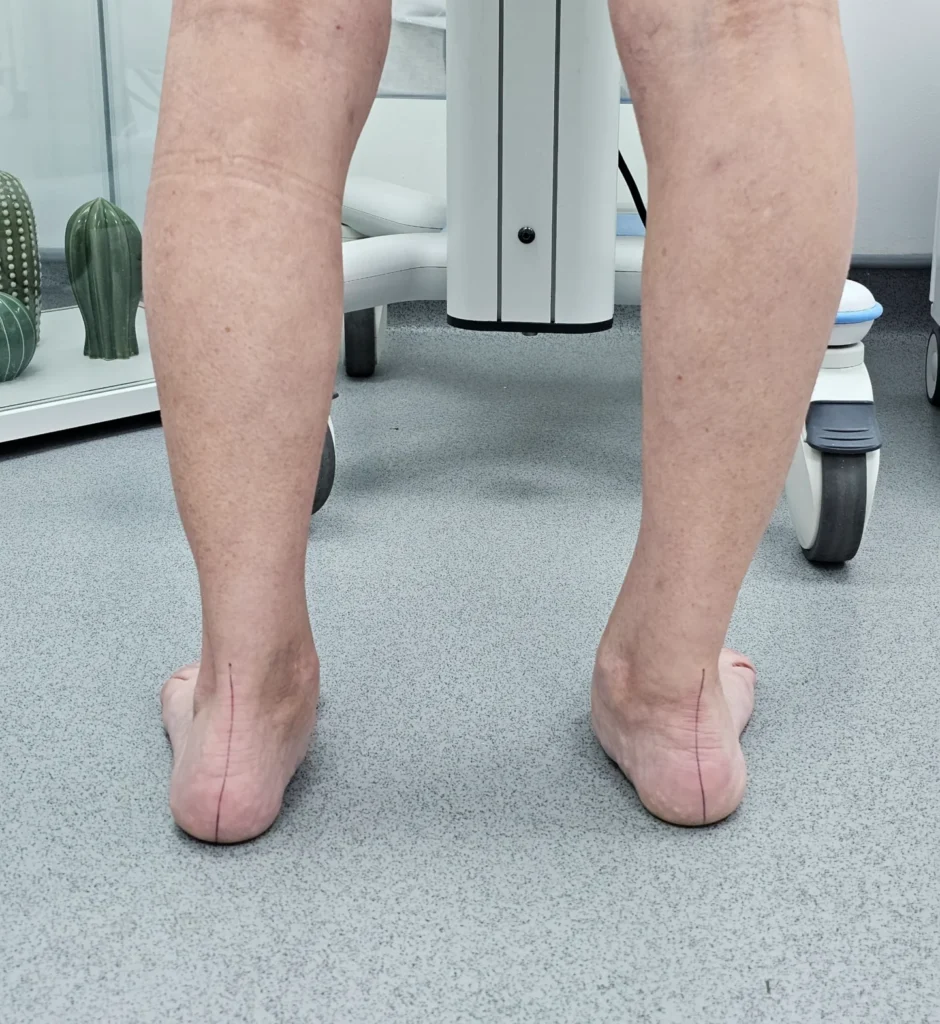
Symptoms may also include:
- Aching or pain in the arches, heels, or inner ankles
- Tired or fatigued feet, especially after standing or walking
- Swelling along the inside of the ankle bone
- Pain that worsens with activity or at the end of the day
- Difficulty standing on your toes or changes in your walking pattern
At Doncaster Foot Clinic, we provide expert assessment and personalised treatment plans to help you manage flat feet effectively and prevent related issues.
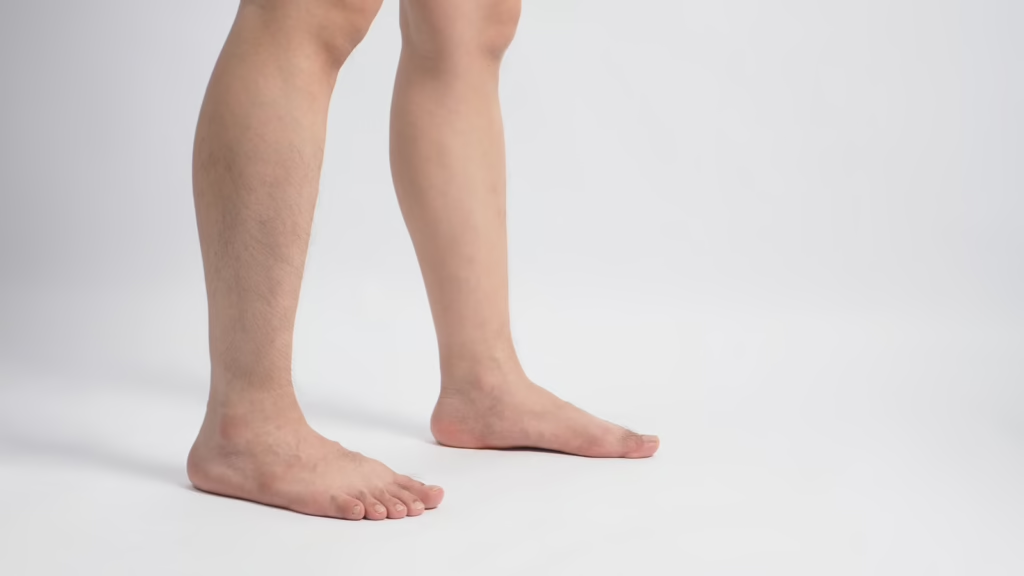
Flat Feet
What Are Flat Feet?
Flat feet (also known as pes planus or fallen arches) occur when the arches on the inside of your feet are low or absent, causing the entire sole to touch the ground when standing or walking. This can be present from childhood or develop later in life. If left unmanaged, flat feet can contribute to problems such as plantar fasciitis, ankle instability, knee pain, or shin splints.
What Causes Flat Feet?
Several factors can contribute to the development of flat feet, including:
- Genetics and Congenital Factors: Some people are born with low or no arches.
- Aging and Tendon Changes: The posterior tibial tendon can weaken over time, causing the arch to collapse.
- Injury or Trauma: Damage to foot or ankle structures from accidents or overuse.
- Biomechanical Issues: Overpronation, tight Achilles tendons, or abnormal gait patterns that place extra strain on the feet.
- Medical Conditions: Arthritis, obesity, diabetes, or neurological issues that affect foot alignment.
- Lifestyle Factors: Sudden increases in activity, unsupportive footwear, or prolonged standing on hard surfaces.
Our thorough assessment process at Doncaster Foot Clinic helps identify the specific causes of your flat feet, so we can create a targeted treatment plan to relieve pain and prevent recurrence.
How Do We Treat Flat Feet?
We believe in a comprehensive approach to long-term relief. Our goal is to reduce pain, provide arch support, correct biomechanical issues, and strengthen the feet to keep you moving comfortably. Our treatment options include:
- Diagnostic Ultrasound: To clearly view the foot structures and tendons for accurate diagnosis.
- Gait Analysis: To identify walking imbalances and abnormal movement patterns.
- Footwear Advice and Custom Orthotics: To support the arches, absorb shock, improve alignment, and reduce strain.
- Targeted Rehab Programs: Exercises to strengthen the foot, ankle, and calf muscles while improving flexibility.
- Radial and Focused Shockwave Therapy: Stimulates tissue repair, reduces inflammation, and promotes healing in stressed tendons and soft tissues.
- Class 4 Laser Therapy: Accelerates healing, decreases swelling, and relieves pain at a cellular level.
- Activity and Load Management Advice: Practical guidance to modify daily activities and prevent overload.
Our team will work with you to develop a personalised plan to accelerate healing, alleviate your ankle pain symptoms, and prevent future issues.
FAQs
Frequently Asked Questions
What are the common symptoms of flat feet?
Symptoms often include aching in the arches or heels, tired feet, inner ankle swelling, and pain that increases with activity. Some people also notice knee, hip, or lower back discomfort due to poor alignment.
Can flat feet be cured?
Flat feet themselves cannot always be “cured,” especially if congenital, but symptoms can be very effectively managed. With the right combination of orthotics, exercises, and advanced therapies, most people experience significant pain relief and improved function.
Do I need custom orthotics for flat feet?
Custom orthotics are often highly beneficial as they provide tailored arch support and correct alignment. Many patients notice a big difference in comfort and reduced fatigue.
How long does it take to see improvement?
Mild cases can improve within a few weeks with conservative care. More persistent or severe flat feet may take several months, but early intervention with shockwave or laser therapy can speed up results.
Can I continue exercising with flat feet?
Yes, but it’s important to choose low-impact activities initially and wear supportive footwear. We’ll guide you on safe exercises and modifications to avoid worsening symptoms.
How can I prevent problems from flat feet?
Wearing supportive shoes, using custom orthotics, maintaining a healthy weight, and doing regular strengthening and stretching exercises can help prevent pain and related complications.
Ready to Get Back on Your Feet Comfortably?
At Doncaster Foot Clinic, we’re committed to helping you manage flat feet effectively so you can move with comfort and confidence again. If your low arches are causing you foot pain, contact us today to book your personalised assessment. Together, we’ll create a plan to support your feet and keep you active!