
FAQs
Frequently Asked Questions
What Causes Ingrown Toenails?
Ingrown toenails often result from improper nail-trimming techniques, wearing shoes that are too tight or too short, specific nail shapes that bend naturally into the skin, or due to an injury to the toenail.
Can Ingrown Toenails Be Treated at Home?
Mild ingrown toenails can sometimes be treated at home by soaking the foot in warm, soapy water several times a day and gently massaging the swollen skin away from the nail. However, if home treatments don’t relieve pain, if there’s excessive redness, swelling, and discharge, or if you have diabetes or poor circulation, you should seek professional treatment.
What Does Professional Ingrown Toenail Management Involve?
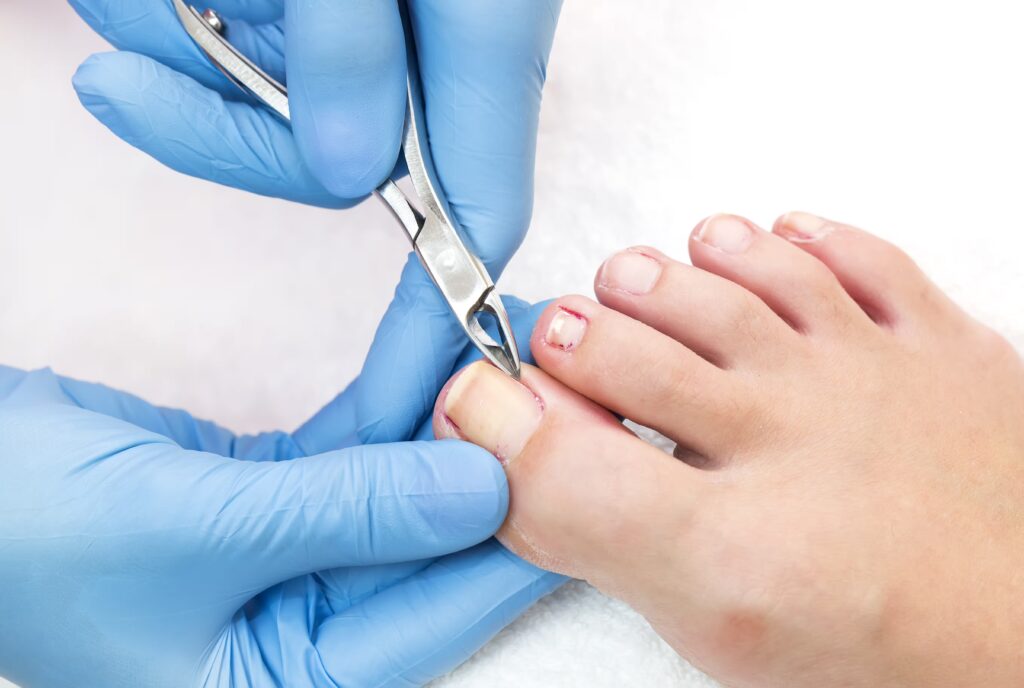
Professional ingrown toenail management usually involves the careful trimming of the nail, and if necessary, removal of the ingrown section of the nail. A chiropodist performs the procedure, minimizing discomfort and preventing infection while providing advice on proper nail care to prevent recurrences.
Is the Treatment for Ingrown Toenails Painful?
Chiropodists employ techniques to manage discomfort during the treatment. If an infection is present or there’s a need for a more invasive procedure, a local anesthetic may be used to numb the toe.
How Can I Prevent Ingrown Toenails in the Future?
Prevention is often rooted in proper foot hygiene and nail care. Trim toenails straight across, wear properly fitting shoes, avoid trauma to the toenail, and keep feet clean and dry. If you are prone to ingrown toenails, regular maintenance from a chiropodist can help prevent their recurrence.